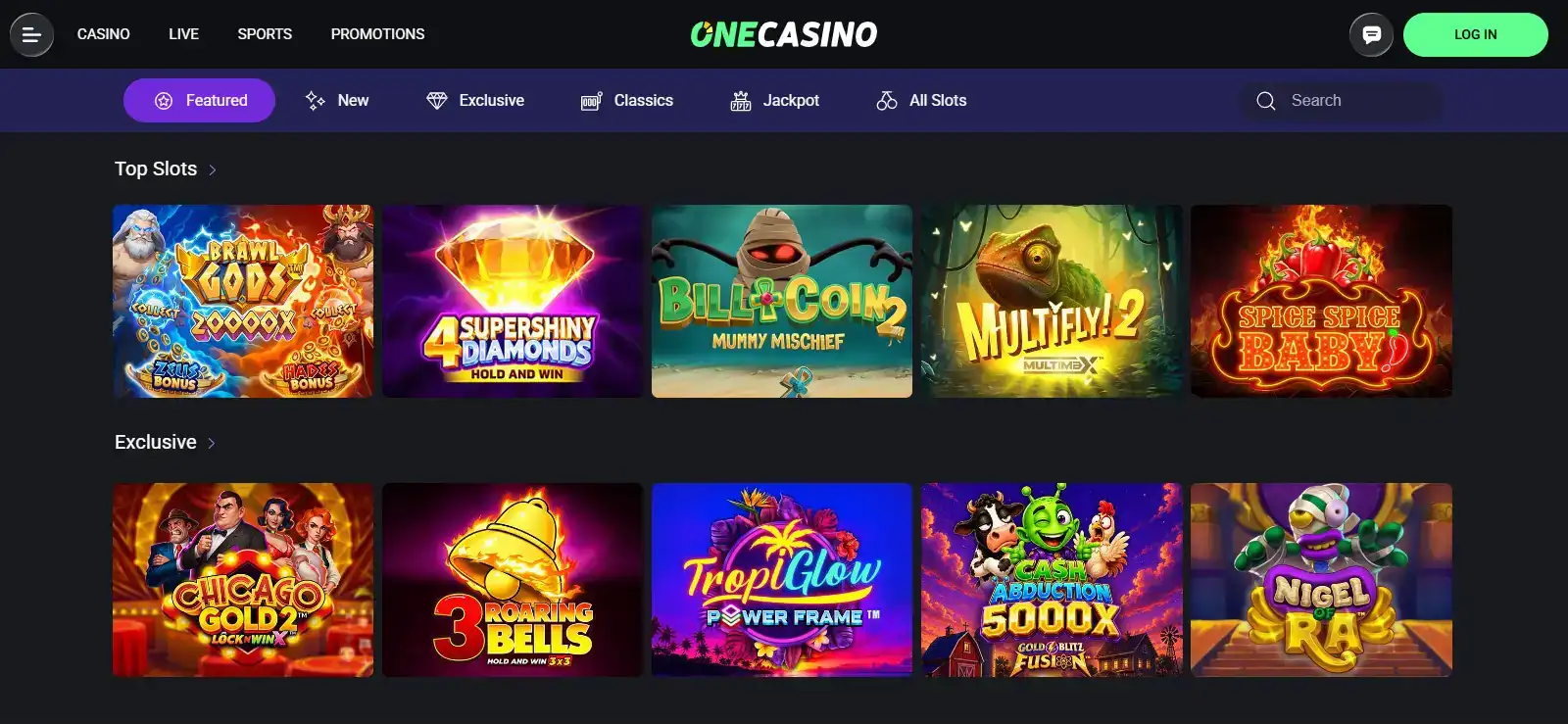
OneCasino payment methods for New Zealand players
 Available in US
OneCasino uses conventional fiat payment rails rather than crypto deposits or withdrawals. Bank transfer, credit and debit cards, paysafecard and Skrill form the core public method set, while the exact cashier display can vary by account, country and currency. The practical payment picture is therefore less about finding an exotic rail and more about matching the cashier currency, account-holder name, deposit route and later withdrawal path.
Table of Contents
- Fees are simple at first glance, with one withdrawal caveat
- The core payment set is fiat and familiar
- Currency handling deserves a separate check for a New Zealand account
- The withdrawal path starts with the deposit method and account name
- Deposit controls reduce avoidable friction later
- Common questions about OneCasino payments
- A clean cashier setup starts before the first deposit
Fees are simple at first glance, with one withdrawal caveat
OneCasino presents ordinary deposits and withdrawals as carrying no routine casino charge. That is the useful baseline when comparing the available fiat rails: choosing a bank transfer, card, paysafecard or Skrill is not presented as a choice between different standard casino fee schedules.
The terms add an important qualification. OneCasino reserves the right to apply an assigned withdrawal-processing fee if that fee is clearly shown when the withdrawal request is made. The consequence is that the fee question has two layers: there is no routine advertised deposit or withdrawal charge, but a specific cash-out can still carry a disclosed processing fee at request time.
That makes the cashier screen part of the decision. Before confirming a withdrawal, read any fee shown for the selected route and compare it with the amount being withdrawn. A fixed processing charge has a larger proportional effect on a small cash-out than on a larger one, even when the nominal fee is the same.
The separate OneCasino withdrawal guide covers processing windows, method return and verification at cash-out in more detail.
The core payment set is fiat and familiar
The payment methods associated with OneCasino are bank transfer or bank account payments, credit and debit cards, paysafecard and Skrill. Independent payment profiles also identify Visa and Mastercard within the card category. The method set is conventional for a fiat-only account and does not require a player to manage wallet addresses, blockchain networks or token conversion.
Method availability can still change with the account context. OneCasino’s terms make clear that minimum and maximum levels can be specified by payment method, and the public finance material does not provide one fixed ordinary-deposit minimum that applies across every cashier route. The correct comparison is therefore between the methods actually presented in the account rather than a universal minimum copied across all rails.
| Method | Currency | Min Dep | Min WD | Speed | Fee |
|---|---|---|---|---|---|
| Bank transfer / bank account | Account and cashier dependent | Set by method in the cashier | General account withdrawal rule applies | Method dependent; detailed timing belongs to the withdrawal process | No routine charge; an assigned withdrawal-processing fee can apply if shown |
| Credit / debit card | Account and cashier dependent | Set by method in the cashier | General account withdrawal rule applies | Method dependent; detailed timing belongs to the withdrawal process | No routine charge; an assigned withdrawal-processing fee can apply if shown |
| paysafecard | Account and cashier dependent | Set by method in the cashier | General account withdrawal rule applies | Cashier and withdrawal-route dependent | No routine charge; any applicable processing fee must be shown |
| Skrill | Account and cashier dependent | Set by method in the cashier | General account withdrawal rule applies | Method dependent; detailed timing belongs to the withdrawal process | No routine charge; an assigned withdrawal-processing fee can apply if shown |
The table is deliberately operational rather than numerical where the public material does not support one stable per-method figure. The useful comparison is which rail is available to your account, what currency the cashier shows, whether the payment instrument belongs to you, and what the withdrawal screen says when money moves back out.
Using a payment method in the registered account holder’s own name is especially important. OneCasino’s terms require deposits and withdrawals to use the player’s own payment instruments. That turns ownership into a practical filter: a convenient method is only suitable if the name and account details can be matched during a later check.
Currency handling deserves a separate check for a New Zealand account
There are two concrete currency contexts in the public material. OneCasino’s current international terms name EUR, CAD and DKK as accepted payment currencies and state that payment accounts using another currency can be converted to EUR. An NZ-facing independent profile lists NZD. Those contexts should be read side by side rather than collapsed into a single universal statement about every New Zealand account.
The practical consequence is that a player funding from an NZD bank account should look at the actual account and cashier currency before depositing. If the casino balance is held in a different currency, a conversion can occur somewhere in the payment chain. That can be handled by the casino account, payment provider or bank, depending on the route in use.
Currency conversion is not the same as a casino deposit fee. A casino can describe deposits as fee-free while a bank or payment provider still applies its own exchange rate or conversion charge. Keeping those two costs separate makes it easier to understand why the amount leaving an NZD account may not map one-for-one to the balance shown after conversion.
A useful pre-deposit check: compare the currency shown for the casino balance with the currency of the bank, card or wallet you intend to use. If they differ, inspect the conversion terms before choosing the rail.
- Open the cashier and note the balance or payment currency shown for the account.
- Check whether the selected bank, card or wallet is funded in the same currency.
- If the currencies differ, review the exchange rate or conversion charge applied by the payment provider or bank.
- Keep the same payment route available for a later withdrawal where possible.
This step is more useful than assuming that an NZ-facing account always settles natively in NZD. It focuses on the information that actually determines the transaction cost at the moment of payment.
The withdrawal path starts with the deposit method and account name
OneCasino normally sends withdrawals back through the same method used for the deposit where possible. It can require a bank transfer instead, so the original funding route is a starting point rather than an absolute guarantee of the return rail. Deposits and withdrawals must also be connected to the registered account holder.
A first withdrawal has an additional prerequisite. The general rules require a €10 or currency-equivalent qualifying deposit before the first withdrawal, including where the balance came from a no-deposit bonus. A New Zealand player review describes a NZ$20 banking-verification deposit before a no-deposit win was paid, illustrating how an account-specific verification step can sit on top of the general rule.
Withdrawal timing is intentionally not reduced to one number here. The operator and independent payment profile publish different timing frames by method, so the detailed comparison belongs on the withdrawal page where both views can be shown without creating a false average or promise. At the payments-home level, the important point is that processing time depends on the route and on whether verification is triggered.
Independent profiles list no general withdrawal cap, while the public terms reviewed for this guide do not state a general account-wide cap. That makes method-specific and request-stage conditions more important than a single headline cash-out ceiling.
Verification can become more detailed at withdrawal. The account and verification guide explains the identity, payment-card and source-of-funds documents that OneCasino can request when a transaction triggers further checks.
Deposit controls reduce avoidable friction later
The easiest way to improve the payment path is to make the deposit traceable from the start. The name on the casino account should match the owner of the bank account, card or payment instrument. Third-party deposits can lead to withdrawal refusal or account blocking, so using another person’s card or account creates a problem that may only surface when funds are being withdrawn.
The payment route also intersects with bonus rules. A no-deposit balance does not remove the first-withdrawal qualifying-deposit requirement, and asking for a withdrawal before applicable wagering is complete can remove or void an active bonus and related bonus winnings. The bonus guide explains how wagering, game contribution and early withdrawal interact.
- Use a bank, card or wallet in your own name.
- Check the cashier currency before depositing.
- Keep payment records until the withdrawal is complete.
- Do not assume that fee-free casino processing removes bank or currency-conversion costs.
- Review bonus withdrawal conditions before requesting a cash-out from a bonus balance.
This sequence matters because deposits are easy to evaluate at the moment they succeed, while payment friction is often discovered later. A clean ownership trail, clear currency choice and retained transaction records make the later withdrawal process easier to explain if the account is reviewed.
Common questions about OneCasino payments
Which payment methods does OneCasino use?
Core fiat rails include bank transfer, credit and debit cards, paysafecard and Skrill. The exact cashier mix can vary by account, country and currency.
Does OneCasino support NZD?
An NZ-facing independent profile lists NZD, while OneCasino’s current international terms name EUR, CAD and DKK and state that other-currency payment accounts can be converted to EUR. Treat the cashier currency shown on the account as the practical reference.
Does OneCasino charge deposit or withdrawal fees?
OneCasino presents routine deposits and withdrawals as fee-free, while its terms reserve the right to apply an assigned withdrawal-processing fee when that fee is clearly shown at the request stage.
What is required before the first withdrawal?
The general rules require a €10 or currency-equivalent qualifying deposit before the first withdrawal, including after a no-deposit bonus.
Does a withdrawal have to use the same payment method as the deposit?
Withdrawals normally return through the same method used for the deposit where possible. OneCasino may require a bank transfer instead, and payment instruments must be in the registered account holder’s own name.
A clean cashier setup starts before the first deposit
OneCasino’s payment model is straightforward in structure: familiar fiat rails, no routine advertised casino fee, same-method withdrawal where possible and account-holder-name matching. The parts that deserve attention are the ones that vary with the live account—currency, method limits, conversion and the withdrawal route. Checking those details before money moves is more useful than relying on a single generic deposit minimum or payout-time claim.
Written by the editors at One-casino-slots.net.