OneCasino verification and account controls
 Available in US
OneCasino uses risk- and transaction-triggered account checks rather than a single one-time document step. Identity, address, payment ownership and source-of-funds questions can become relevant at different points, including around larger deposits and withdrawals. The practical aim is to keep the account, payment trail and documents consistent from the start so a later review is easier to answer.
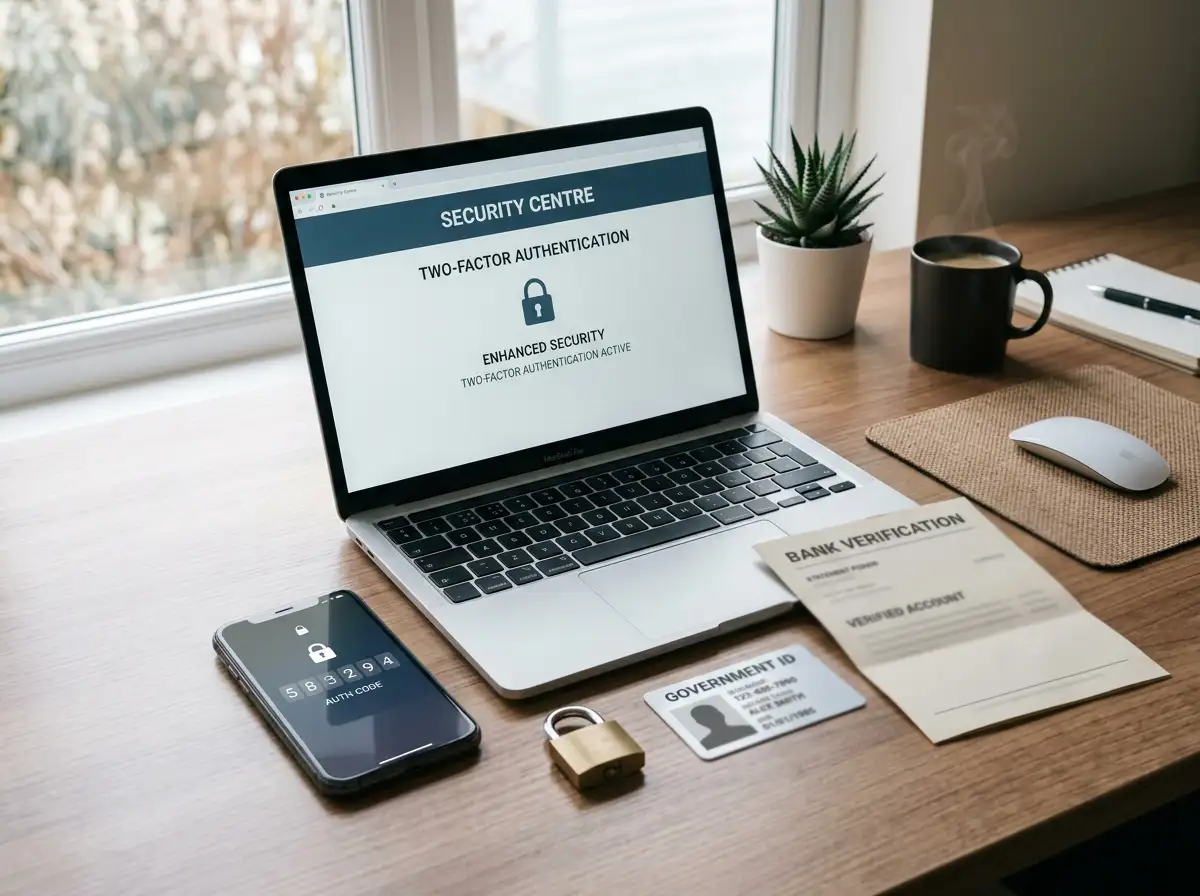
Table of Contents
- One account keeps identity, payments and bonus use tied together
- Verification can be triggered by transaction size, withdrawals or account risk
- Two-factor authentication adds a second login step
- Responsible-gambling controls can reduce exposure before a session escalates
- Prepare documents around the question each check is trying to answer
- Common questions about OneCasino accounts
- Consistent records make later verification easier to resolve
One account keeps identity, payments and bonus use tied together
OneCasino’s terms use a one-account rule. Duplicate accounts and bonus-abuse provisions can lead to account closure and action against bonuses or winnings. The practical reason is that the casino treats identity, payment ownership and promotional eligibility as parts of one customer relationship rather than separate profiles that can be switched between.
A second account can create conflicts that are difficult to unwind later. Two profiles may carry different contact details, payment instruments or bonus histories, making it harder to show which account owns a balance or which terms applied to a transaction. Keeping one account also makes two-factor authentication and responsible-gambling settings easier to manage consistently.
The rule matters most when a player changes email address, phone number or payment method. Updating the existing account is safer than opening another profile to work around an old contact detail. A duplicate profile can look like an attempt to bypass account limits or promotional conditions even when the original motive was convenience.
- Keep one active player account.
- Update contact or payment details through the existing profile.
- Use payment instruments that belong to the registered account holder.
- Keep bonus activity attached to the same account history.
The same principle runs through the payment methods guide: the cleanest cashier path is the one where the casino account name and the owner of the bank, card or payment instrument match from the beginning.
Verification can be triggered by transaction size, withdrawals or account risk
OneCasino can request identity and payment verification when its risk or transaction checks call for it. The terms specifically identify deposits above €2,000 equivalent as one trigger for additional verification, and a withdrawal can also start a review. The operator can request enhanced due diligence at other times as well.
That makes the €2,000 figure a trigger, not a safe zone below which checks cannot happen. A smaller transaction can still be reviewed when other account circumstances require it. A larger deposit can make additional evidence more likely, but no public rule guarantees that a particular account will be checked only after crossing one threshold.
| Trigger or context | What can be checked | Practical preparation |
|---|---|---|
| Identity review | Name and identity details | Keep a current government-issued identity document available. |
| Address review | Registered residential details | Use a current proof-of-address document that matches the account. |
| Payment review | Ownership of card, bank or payment instrument | Keep records showing that the payment method belongs to the account holder. |
| Deposit above €2,000 equivalent | Additional transaction and customer checks | Be ready to explain and document the source of the funds. |
| Withdrawal review | Identity, payment trail and source of funds where required | Keep deposit and withdrawal records connected to the same account. |
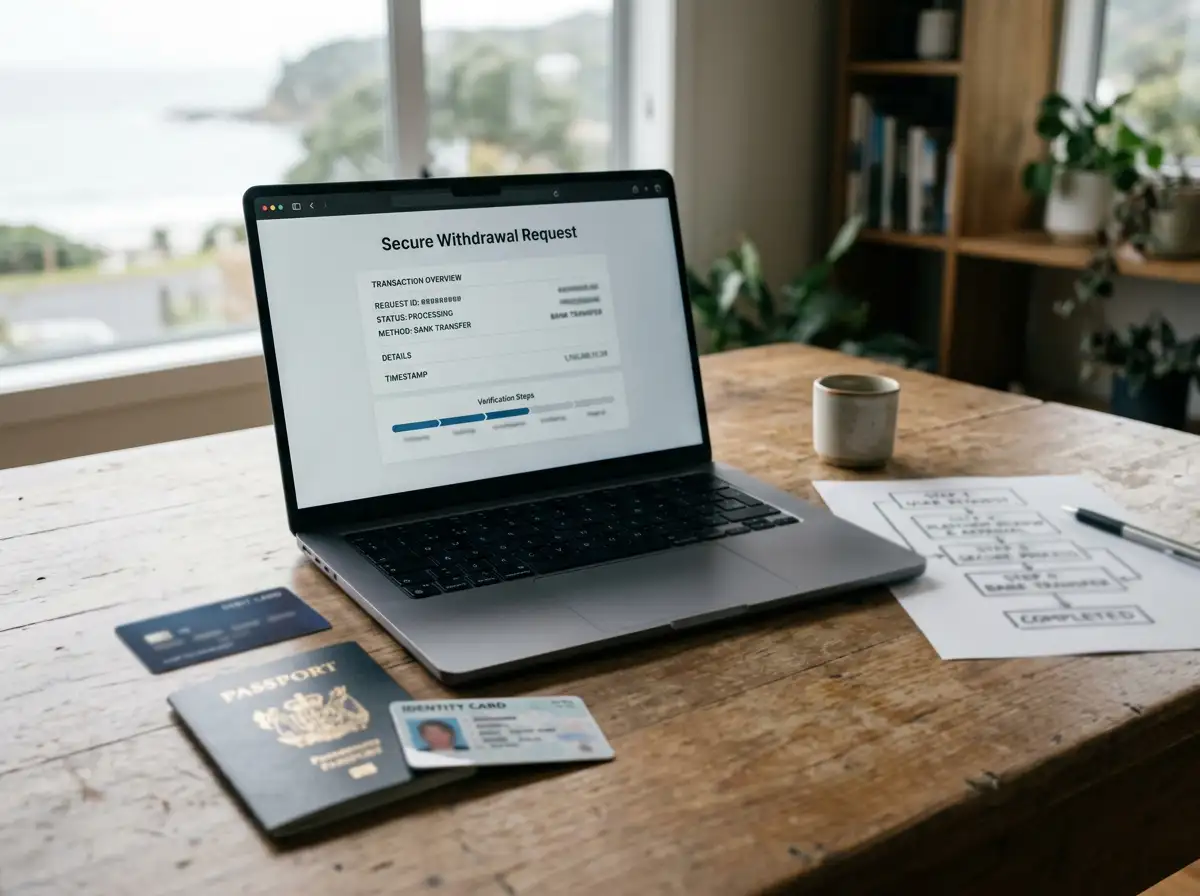
The withdrawal guide shows how those checks fit into the cash-out sequence. Verification should be treated as part of the payment path rather than a separate event that only happens when an account is opened.
Two-factor authentication adds a second login step
OneCasino’s login flow supports two-factor authentication by SMS or email. That gives the account a second check beyond the password: access can require a code sent through a contact channel linked to the profile.
Two-factor authentication is most useful when the contact channel itself is secure. A weak email password or a phone number that is no longer controlled by the player can undermine the second step. Keeping the registered email and mobile number current is therefore part of maintaining the casino account, not just an administrative detail.
A simple account-security routine covers most of the practical risk:
- Use a unique password for the casino account.
- Protect the email account or phone number used to receive authentication codes.
- Update the registered contact details when they change.
- Review unexpected login or verification messages before acting on them.
- Use only the normal account channels for uploading requested documents.
Security and payment ownership reinforce each other. If the login account, contact details and payment instruments all point to the same person, it is easier to explain unusual transactions or respond when the account is reviewed.
Responsible-gambling controls can reduce exposure before a session escalates
OneCasino’s terms describe spending, bet, loss and deposit limits, together with session-time controls, time-out, self-exclusion and account closure. These controls work at different levels. A deposit limit restricts funding, a loss or bet limit constrains play, a session control addresses time, and a time-out or self-exclusion creates a stronger break from access.
Limit changes are deliberately asymmetric. A decrease applies immediately, while an increase or revocation carries a seven-day cooling-off period. That design makes it easy to tighten a limit when needed and slower to loosen one during a period of higher gambling activity.
| Control | What it manages | Useful application |
|---|---|---|
| Deposit limit | Money entering the account | Set a funding ceiling before play begins. |
| Bet or loss limit | Amount risked or lost | Keep session exposure inside a predefined boundary. |
| Session-time control | Time spent playing | Prevent a planned short session from extending indefinitely. |
| Time-out / self-exclusion | Access to gambling | Create a stronger break when ordinary limits are not enough. |
For New Zealand support outside the casino account, Gambling Helpline is available at gamblinghelpline.co.nz and 0800 654 655. Gambling can cause financial harm; setting limits before losses occur is more useful than trying to recover money after the plan has already been exceeded.
Prepare documents around the question each check is trying to answer
OneCasino can ask for identity documents, proof of address, payment-card evidence and source-of-funds or source-of-wealth material. Those requests are easier to handle when the documents are organised by purpose instead of uploaded as a miscellaneous bundle.
An identity document answers who owns the account. Proof of address connects the person to the registered location. Payment evidence shows who controls the card, bank account or other funding route. Source-of-funds material explains where the deposited money came from, while source-of-wealth information can address the broader origin of financial resources when enhanced checks require it.
A practical document checklist
- Identity: a current identity document with matching account details.
- Address: a current document showing the registered residential address.
- Payment: evidence that the bank, card or payment account belongs to the registered player.
- Source of funds: records that relate to the money used for the reviewed transaction.
- Source of wealth: broader financial evidence when enhanced due diligence calls for it.
Only provide the material requested through legitimate account channels and keep copies of what was submitted. The point is not to guess every document the casino might ever request, but to make the evidence internally consistent with the account and transaction under review.
Bonus activity can also intersect with account review because duplicate-account and abuse provisions sit alongside the promotional terms. The bonus guide explains wagering, maximum-bet and withdrawal conditions that can affect the same account history.
Common questions about OneCasino accounts
What documents can OneCasino ask for?
OneCasino can request identity documents, proof of address, payment-card evidence and source-of-funds or source-of-wealth material.
Can a withdrawal trigger verification?
Yes. Verification can be triggered by a withdrawal as well as by other risk or transaction checks.
Does OneCasino use a deposit threshold for extra checks?
Its terms identify deposits above €2,000 equivalent as one trigger for additional verification, while checks can also occur at other times.
Does OneCasino support two-factor authentication?
Yes. The login flow supports a two-factor authentication code sent by SMS or email.
How do OneCasino gambling limits change?
Limit decreases apply immediately. Increases or revocations carry a seven-day cooling-off period.
Consistent records make later verification easier to resolve
OneCasino’s account controls work best when identity, contact details, payment ownership and transaction records all tell the same story. Verification can expand around larger deposits or withdrawals, two-factor authentication protects access, and responsible-gambling limits can constrain money and time before a session grows beyond plan. The practical advantage comes from preparation: one account, current contact details, payment methods in your own name and documents organised around the transaction being reviewed.
Published by the One-casino-slots.net team.